

9. Ceramic Development in the Middle East
| 917 Page: 170 of 418 Go To Page: |  |
◁◁ First | ◁ Previous | Next ▷ | Last ▷▷ |
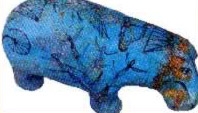
Blue faience hippopotamus
- source Tour Egypt.net
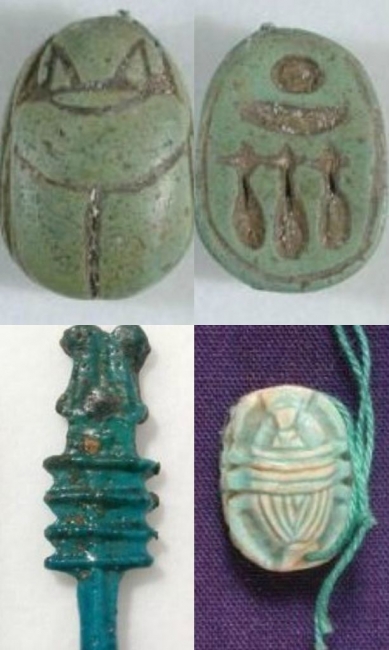
Dynasty 18 scarab, on reverse
“Ra is the lord of perfection”,
pillar amulet and beetle scarab
UC60716/a, 38648 and 44041
- Copyright of the Petrie Museum
of Egyptian Archaeology, UCL
Blue faience figures of the sacred hippopotami were particularly popular. They were also used for amulets (charms), images of gods such as Isis, and scarabs (models of Egyptian scarab beetles representing creation and/or resurrection).
The small servant figures or mummies called “Ushabti” that were buried with the dead after about 2,000 BC to do work in the afterlife, were often made of faience or glazed pottery. They usually had small agricultural implements and burial inscriptions on their front. Later a wider colour range developed for faience including white (using tin or antimony oxide), red and marbled browns (iron) and yellow (silver or antimony).
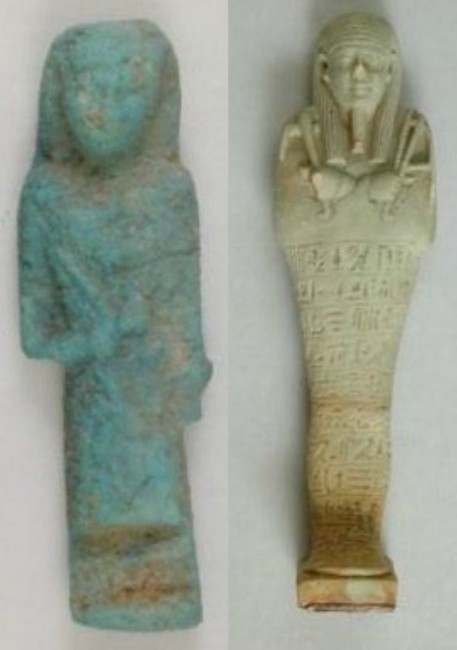
Ushabtis, blue faience Dynasty 22 and
blue glazed Dynasty 26, UC29961
and 28055 - Copyright of the Petrie
Museum of Egyptian Archaeology, UCL
Tin was probably sourced from India, as there is plenty of evidence of trading between them at least from 1,400 BC. Later vases have been found up to 10” high with a white body having purple decoration of figures and hieroglyphics using manganese or gold. The Egyptians had clearly developed a good knowledge of metal oxides as can be seen from this range of pigments. Pottery moulds were used to aid shaping the faience objects in the Middle Kingdom. Clay was also added to improve shaping on a potters wheel. An example found in an Egyptian tomb was a rhyton drinking vessel, described as made of “fritpaste”, made in the Cretan style and dated to 1,400 BC.
| Page: 170 of 418 Go To Page: | |
◁◁ First | ◁ Previous | Next ▷ | Last ▷▷ |
Author: Dr. Stan Jones © Copyright 2010 -