

6. Spread of Agriculture, Pottery and Civilisations
| 845 Page: 51 of 418 Go To Page: |  |
◁◁ First | ◁ Previous | Next ▷ | Last ▷▷ |
The Megalithic Burial Culture that started in Central Europe in the fifth millennium BC, reached South India around 1,200 BC, and after 500 BC the Vedics expanded into Southern India. Megalithic pottery included a red ware with black tops, visually similar to the much earlier Egyptian Badarian wares, black burnished and red slipped wares, some decorated with symbols often similar to Indus script.
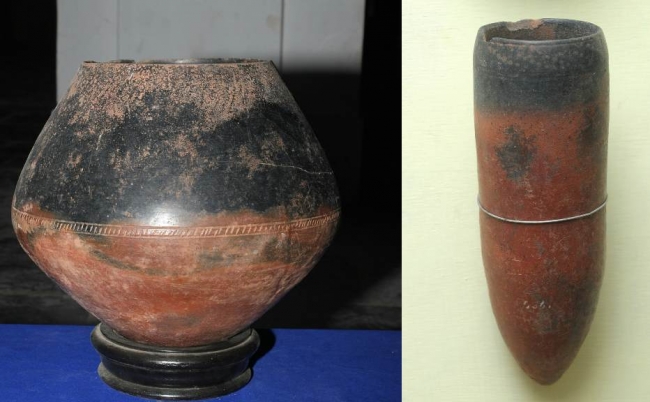
Black Topped Red Ware - courtesy
Government Museum, Chennai
Other domestic ceramic items were tablewares, such as large platters, amphorae, unusual pottery horns for the storage of seeds for planting in the next season and grinding tables with rollers.
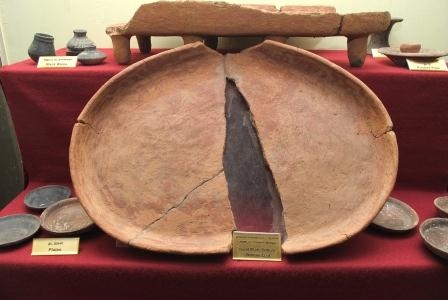
Large Platter
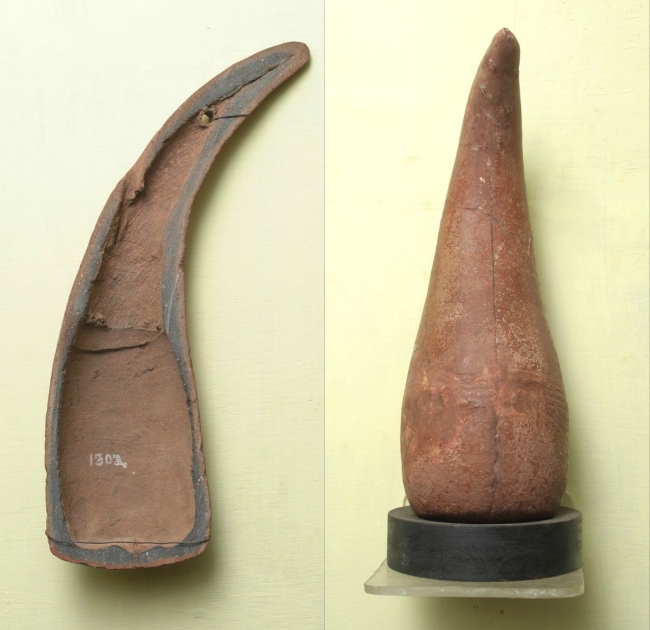
Seed Horns
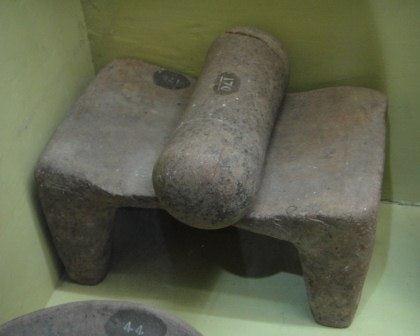
Grinding Table and Roller - courtesy
Government Museum, Chennai
The burials are particularly noted for the remarkable sarcophagi that were zoomorphic with 4, 6 or 8 legs, some with animal heads such as rams, together with a range of supporting pottery grave goods in russet and black ware.
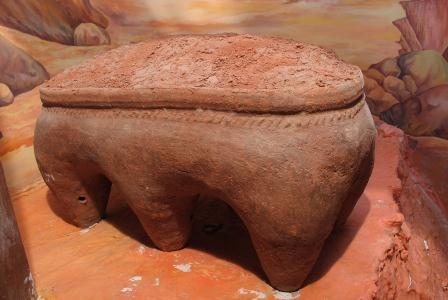
Six-Legged Sarcophagus - courtesy
Government Museum, Chennai
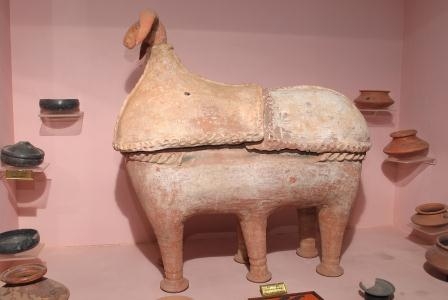
Ram’s Head Sarcophagus - courtesy
Government Museum, Chennai
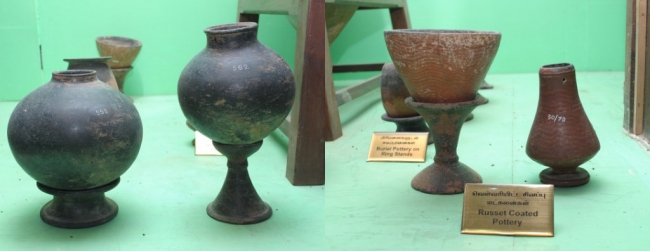
Black and Russet Coated wares - courtesy
Government Museum, Chennai
| Page: 51 of 418 Go To Page: | |
◁◁ First | ◁ Previous | Next ▷ | Last ▷▷ |
Author: Dr. Stan Jones © Copyright 2010 -