

7. Pottery Technology 1
| 856 Page: 62 of 418 Go To Page: |  |
◁◁ First | ◁ Previous | Next ▷ | Last ▷▷ |
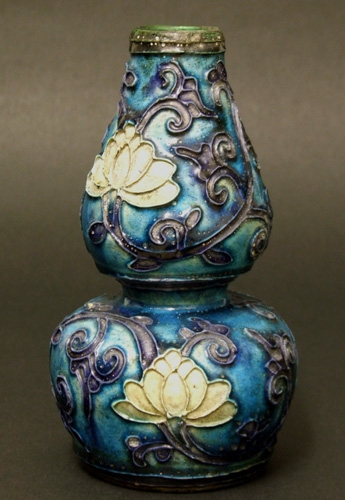
Chinese Ming Double Gourd Vase
1,500-1,550 AD - courtesy R&G
McPherson Antiques
Clearly the potter’s wheel is particularly useful for making round or cylindrical objects. In practice, a pot may be constructed using a combination of techniques. As an example, in India, pots that have first been thrown on the wheel are then further enlarged and shaped by beating with paddle and anvil. Perhaps the most skilful of all potters on the wheel were the Chinese. Good examples of their skill are the double-gourd vases made from the 16th century AD onwards that were turned in separate sections and joined together later.
The way in which a pot has been formed may be obliterated to a greater or lesser extent by the final finishing of the vessel. Surfaces may be wiped and scraped, and walls and bases thinned down by paring (removing slivers of clay with a knife). Rim profiles were sometimes formed using pre-shaped bones, horn and even shaped ceramics as templates.
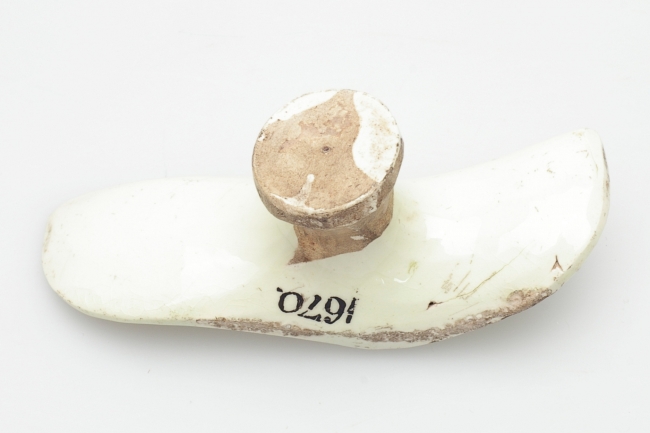
Wedgwood ceramic profiler - Image courtesy
of the Wedgwood Museum
As an extension of the potter’s wheel, lathes, similar to wood lathes, were used to finish the clay vessels when they had been dried, making their surfaces smoother and more consistent. They were used as early as 500 BC by the Greeks, and extensively by Staffordshire potters to increase productivity at the end of the 17th century AD.
| Page: 62 of 418 Go To Page: | |
◁◁ First | ◁ Previous | Next ▷ | Last ▷▷ |
Author: Dr. Stan Jones © Copyright 2010 -