

8. Ceramic Development in China
| 874 Page: 90 of 418 Go To Page: |  |
◁◁ First | ◁ Previous | Next ▷ | Last ▷▷ |
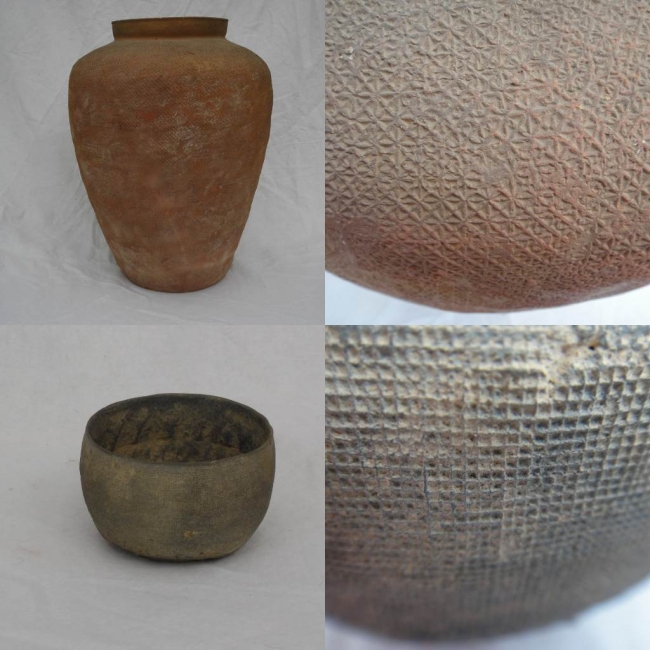
Warring States vessels with textile
patterns - courtesy Glade Antiques
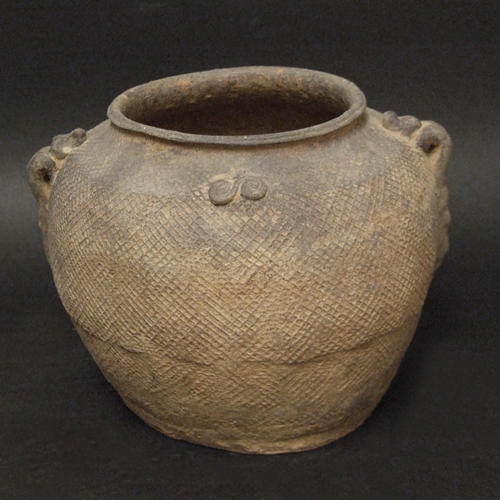
Eastern Zhou grey body with animal handles
and paddle-made decoration 475-221 BC -
courtesy R&G McPherson Antiques
From the 4th century BC imitations of gold and silver inlaid bronze vessels were also made up to the end of the Han period. For example, in Chekiang (present Zhejiang) and Kuangtung (present Guangdong) there was wheel-made, fine-grained wares with a grey body, having impressed ornamentation, raised ribs and even animal mask handles in imitation of contemporary bronze vessels. The appearance of household goods of the time can be surmised from ceramic grave goods, as the range of pottery types expanded greatly. Those for burials in Henan Province were low-fired, unglazed or sometimes fired with slip coating and painted, reviving the traditions of North China. They were often squat in shape and bore simple impressed decoration. By far the majority of pots found as grave goods were food containers, ritual vessels or items of household use. Some decoration clearly shows the imitation of woven textiles.
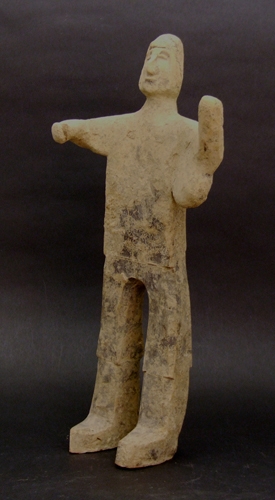
Warring States early figure
- courtesy R&G McPherson
Antiques
In the Chunqiu period and later, the custom of placing ceramic models of humans in tombs became more common, probably following the spread of Confucian ethics banning human sacrifices as companions for the dead, so the figures were a substitute for the real thing. Ceramic models of household furniture appeared in the Warring States Period. Some distinctive pottery was produced in the South West during this time, having an “angular” appearance.
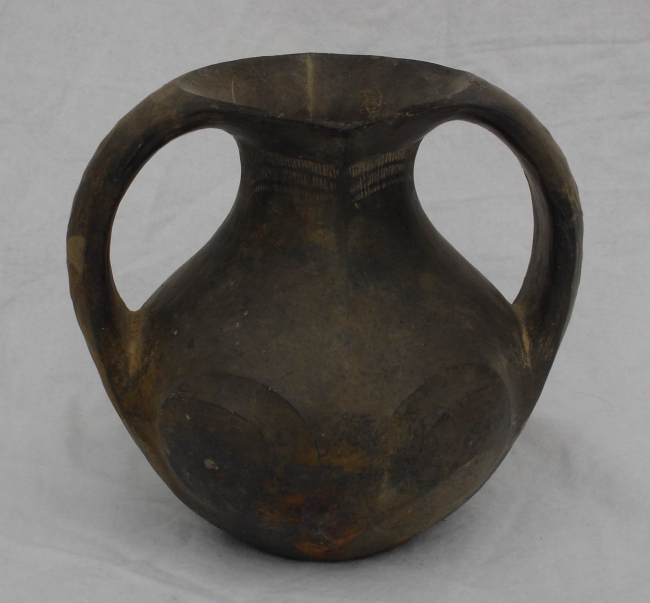
Sichuan blackware, spiral relief
decoration probably representing eyes -
courtesy Glade Antiques
Also, in North China a soft earthenware was produced for burials with a low-fired green lead-based glaze. This is the first time low-fired glazes were used in China. Some pottery used repeated stamping of a pattern or motif over the surface of the vessel before firing. In the lower Yangtze valley an almost porcelaneous stoneware was being developed, covered with a thin glaze based on feldspar, the predecessor of the celadon glaze of the Tang Dynasty.
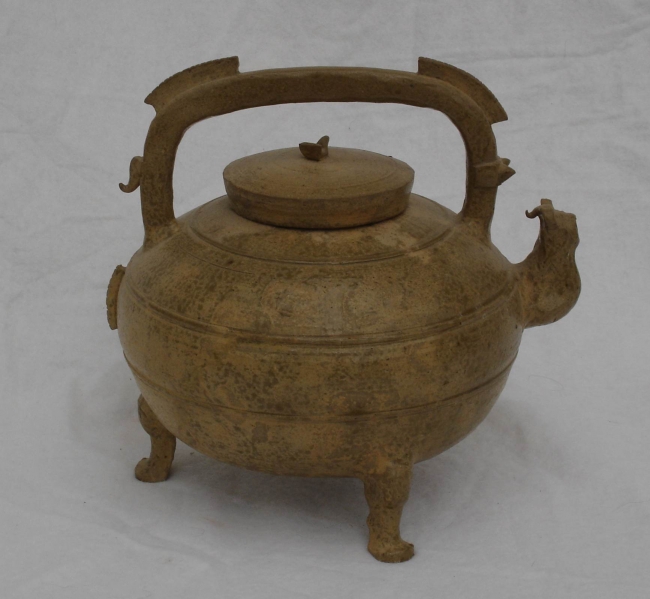
Celadon wine pot, 300 BC - courtesy Glade
Antiques
It is possible that this is the ware that is claimed to be the first porcelain by some Chinese experts. Also during this period there was a change from anonymous potters producing only for Royal and Feudal courts. The growth of landowners and the merchant class became new patrons as they also wished to own and enjoy “fine art”.
| Page: 90 of 418 Go To Page: | |
◁◁ First | ◁ Previous | Next ▷ | Last ▷▷ |
Author: Dr. Stan Jones © Copyright 2010 -