

10. European Pottery to the Fall of the Romans
| 1033 Page: 271 of 418 Go To Page: |  |
◁◁ First | ◁ Previous | Next ▷ | Last ▷▷ |
The influence of immigrant Macedonians on the styles of pottery is noticeable, although it had declined by 215 BC. Bowls, small vases and pots, lamps and pilgrim flasks were produced using the traditional Mesopotamian alkali glazing technology. Hellenistic styles, typical of the late 4th and 3rd centuries BC, were two-handled amphorae, lagynoi (single handled wine jugs) and fish plates that were glazed in green, white and blue. In Anatolia glazed pots, including ones with figures in high relief, were also produced in the Hellenistic period.
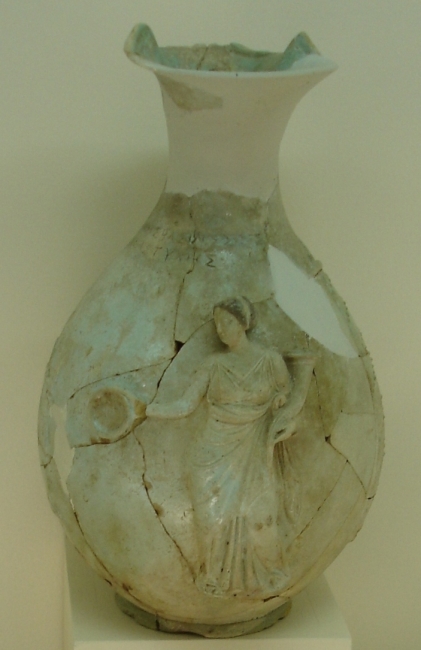
Hellenistic vase with woman in
high relief 330-30 BC - source
Antalya Museum
Little was imported from Greece, except, notably, the pottery figures mentioned earlier, particularly draped women from Tanagra in Boeotia and Myrina on Lemnos.
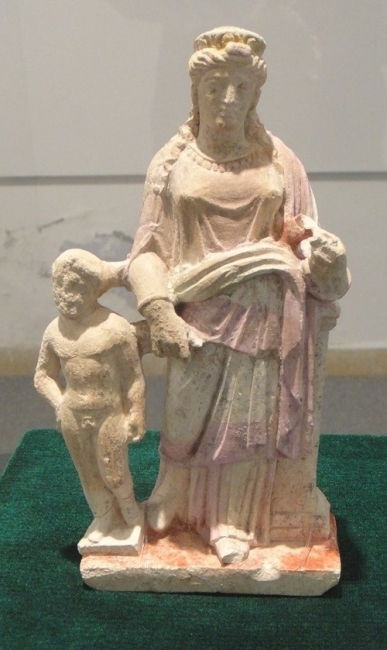
Tanagra statuette - source Guzelyurt
Antiquities Museum
In Seleucia alone 9,000 fragments of these statuettes of Greek gods, athletes, acrobats and women in Greek clothing, such as a nurse and baby and two women gossiping, have been found. This city also had some very fine eggshell-thin wares, a tradition dating back to the 7th century BC that were now shaped in the Greek styles such as the amphora and single handed jug. Similarly, the long-spouted and saucer shaped oil lamps were complimented with Hellenistic style lamps, often multi-spouted and decorated with very good quality relief figures.
Pergamum had become an independent Hellenistic kingdom on the death of Lysimachus in his battle against the Seleucids in 281BC. The Attalid Dynasty was set up there shortly after, and the kingdom of Pergamum flourished under their leader Attalus I Sotor, (241-197 BC), while there was weak Seleucid leadership. He threw out the Celts who had previously invaded parts of Anatolia. Pergamum was rich from silver mines and agriculture, and a centre of the arts. Some interesting pottery items have been found in Anatolia from this time including statues, smoothing irons and baby’s feeding bottles.
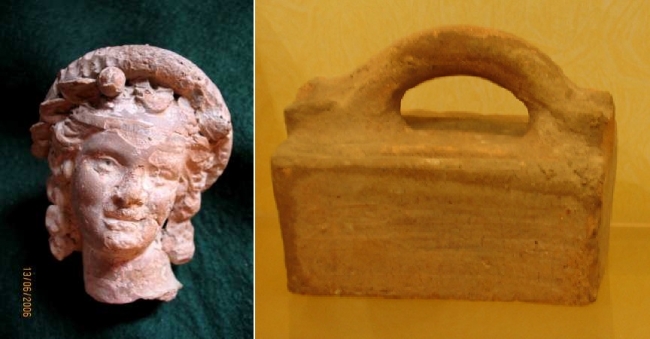
Hellenistic, head of statue, courtesy
Collector-Antiquities and smoothing iron,
source Hieropolis Museum, Turkey
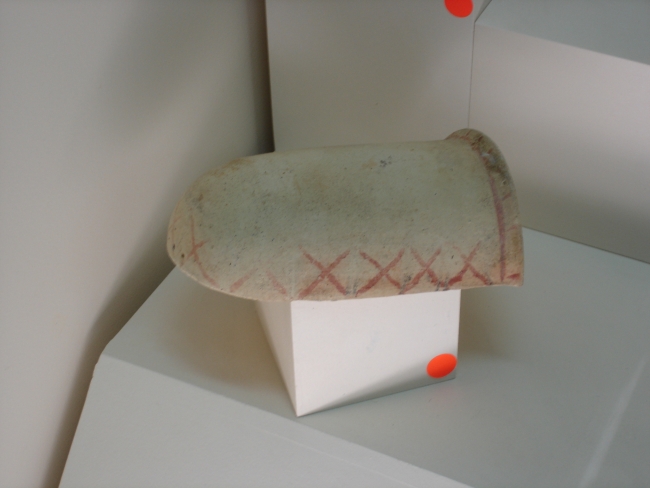
Knee protector or epinetron - source
Hieropolis Museum
Also found there were examples of the Epinetron or knee protection for women spinning or weaving from 6th century BC, together with Roman chamber pots from 1st century BC and military flasks from 5-15th century AD covered in leather to protect them.

Map of Mediterranean area circa 200 BC -
courtesy Thomas Lessman,
worldhistorymaps.info
The two large libraries in Pergamum and Alexandria were constant rivals, but Egypt supplied all the papyrus for Pergamum. As Ptolemy did not want the reputation of his library to be diminished he banned the export of papyrus in 150 BC so the people of Pergamum had to find an alternative. Although the Egyptians had used parchment (made from animal skins) occasionally since 2,500 BC, it was rather crude and very expensive. In the 2nd century BC the Pergamum craftsmen perfected the production of parchment using goatskin, displacing the scrolls of papyrus. Parchment made double-sided printing and leaved books practical, replacing less easy to use scrolls. Parchment became common in medieval Europe and elsewhere. Pergamum was to play a significant role in events that lasted until the death of the last king in 133 BC, who bequeathed the kingdom to the Romans to protect it, and it was made a Roman Province soon after.
| Page: 271 of 418 Go To Page: | |
◁◁ First | ◁ Previous | Next ▷ | Last ▷▷ |
Author: Dr. Stan Jones © Copyright 2010 -