

16. Characteristics and Applications of Advanced Ceramic Materials
| 1868 Page: 388 of 418 Go To Page: |  |
◁◁ First | ◁ Previous | Next ▷ | Last ▷▷ |
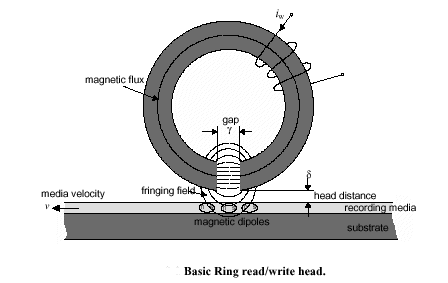
Read/write recording head: illustration of operation
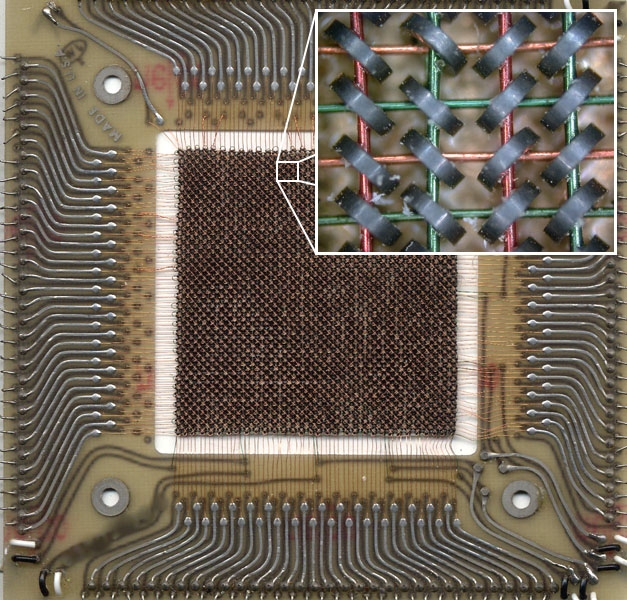
Ferrite core memory - source Wikipedia
The magnetic characteristics of all ferrites depend on the microstructure of the ceramic, so they can be designed at the molecular level for specific electronic applications. Small amounts (a few percent) of materials such as oxides of niobium can have a large effect on the characteristics of a ferrite, achieving much improved performance. These additives are sometimes referred to as “dopants”, since such small amounts are used.
The earliest large-scale use of ferrites was in televisions in the 1950s for high voltage transformers and electron beam deflection yoke rings. In the 1970’s small spinel ferrite rings (cores) were used for computer memory. They were made with a relatively high coercive force so would retain their data indefinitely without refreshing, and were made into matrixes of up to 10,000 cores. The use of ferrite ceramics has expanded rapidly and they are found in a huge range of applications including audio and video recording tapes and heads, ferrite rod antennae, strain gauges and speedometers, generators and motors (for white goods) and stepping motors for computer peripherals.
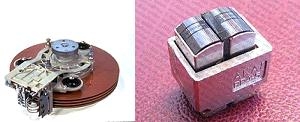
The complete IBM unit and the Akai ferrite head
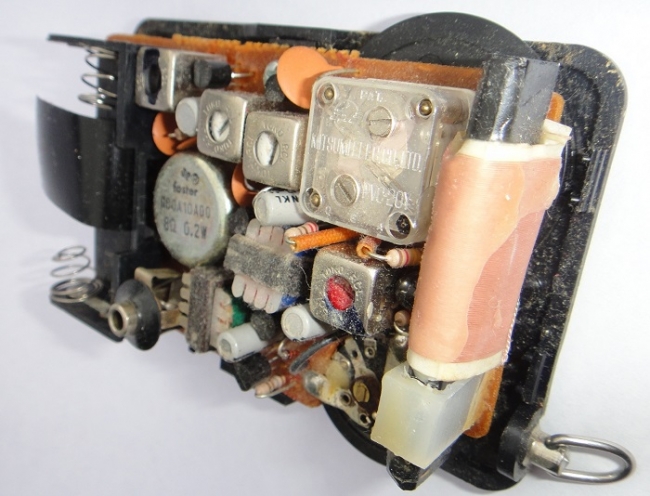
Radio from 1975 showing ferrite rod
antenna in forefront
Another huge market is in the automobile industry. A car may have over 20 dc motors and top end models many more. Other applications are computer discs and drives, electronic filters (particularly to reduce interference on equipment such as laptops), high frequency transformer cores in power supplies, current meters, electric noise absorbing beads for wires, circuit board shields, waterproof tags to identify materials in factories, magneto-optical and electromechanical devices.
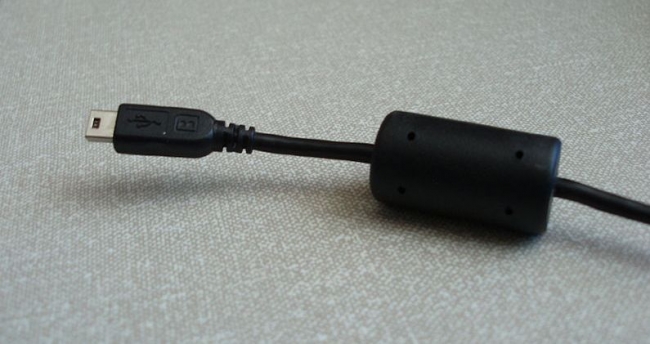
Cable with ferrite noise filter
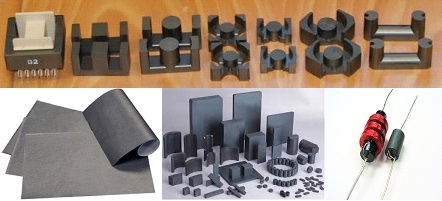
Cores for inductors and transformers;
electronic radio frequency shielding,
source AIC Magnetics; a collection of
components; and ferrite filter “beads”

Wirewound ferrite toroidal filter
- source Planarmag via Hearst
Electronic Products
They are also used in microwave applications such as circulators that allow antennae (aerials) to transmit and receive. Even ferrite loaded paint can be used to absorb radiation otherwise reflecting from metal-framed buildings near airports
Areas of future development in ferrites is the push for higher frequencies that demands ever lower losses requiring the development of new materials, and advances in low profile and surface mount devices.
In USA in the early 1990’s, 35% of the market for magnetic materials was made up of ferrites, representing 600,000 tons per annum. From 1990 to 2010 the ferrite industry worldwide grew from one billion to five billion US dollars, and now 60% of magnets are made of ferrites.
| Page: 388 of 418 Go To Page: | |
◁◁ First | ◁ Previous | Next ▷ | Last ▷▷ |
Author: Dr. Stan Jones © Copyright 2010 -