

8. Ceramic Development in China
| 785 Page: 126 of 418 Go To Page: |  |
◁◁ First | ◁ Previous | Next ▷ | Last ▷▷ |
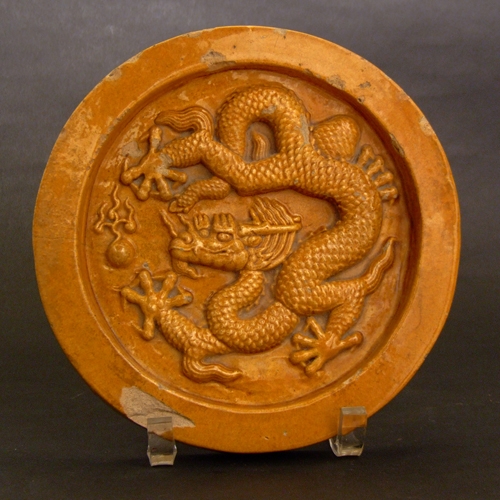
Ming imperial terminal tile with five
clawed dragon - courtesy R&G McPherson
Antiques
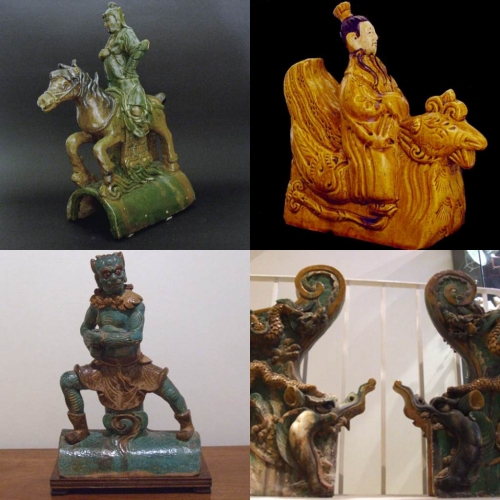
Ming roof tiles, celestial warrior
(general Guan Yu), figure riding phoenix,
massive dragons and fearsome being scaring
evil spirits - courtesy R&G McPherson
Antiques
Practically every oriental museum in the Western World possesses parts of Chinese buildings, especially ceramic roof tiles and figural ornaments. In Han times the decorated panels on the end tiles of roofs already displayed complex designs reflecting the status of the building. In Ming times very important buildings were differentiated by having curved tiles while other buildings had flat ones. The ceramic tiles on the roofs of the Imperial Palace also had predetermined colours, blue representing the sky, yellow the earth and green for water. During the Ming period the Hall of Harvest Prayer had three roof levels appropriately tiled from the top blue, yellow and green. Temples also had certain tile colours, for example the Earth Temple was yellow, the Moon Temple white and the Sun Temple red. Monastery roofs were prescribed green tiles unless it had been granted Imperial privileges when they were yellow. Ordinary residential roofs in the city had to be unglazed, coloured grey or black with no decoration. Far from Pei-Ching houses were supposed to comply with colour and decoration rules, but often had complex roof shapes and ridges (and the occasional dragon!). The number of figures on the roof ridges also illustrated the importance of the building; for example, in the Imperial Palace the Hall of Supreme Harmony there are the maximum number of figures permitted – twelve, the Emperor’s residence ten and the Empress’s living chambers eight. Colourfully glazed ceramic tiles were used for wall decoration, with heavy relief of flowers and imitation of carved beams. Tile makers also produced pottery figures.
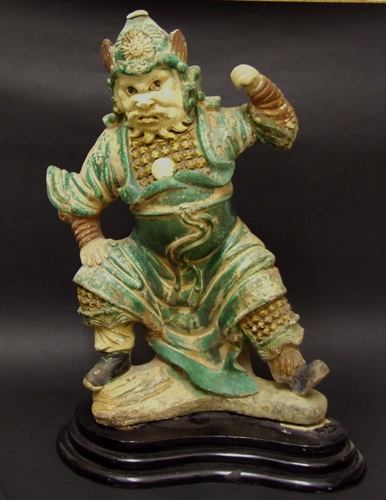
Ming sancai glazed guardian figure -
courtesy R&G McPherson Antiques
Ming Emperors, as others before them, were concerned about the afterlife. Their Tombs for the life hereafter were great palaces, and included chests full of burial goods (Mingqi) including porcelain.
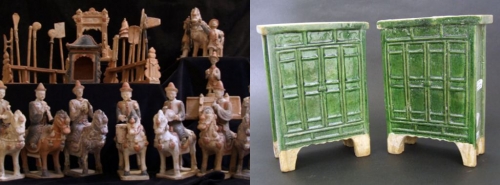
Ming Mingqi (grave goods), detailed
processional set and models of chests -
courtesy R&G McPherson Antiques
One, called Dingling, the Tomb of the Wanli Emperor, contained some 3,000 items. The ceramics removed from Emperors’ graves are used to help establish the date of Ming porcelain, as the primary aids to dating are pieces from a known time of origin that can then be compared with others in terms of their colour, pattern, strength and quality of glaze.
For all the “external” upheaval, the 15th Century was a period of settled prosperity and great achievement in the arts. The Rulers felt a kinship with the heyday of the Tang Dynasty, and their influence is reflected in the vigour and colour of Ming artefacts. Porcelain items were particularly admired as works of art. Collecting “antique” ceramics became fashionable, particularly Sung celadon. The middle classes also joined in, causing the demand for both functional and decorative porcelain to increase. The elite turned to crafts such as ceramics and started to sign their products so they became popular and more valuable. There were no further fundamental developments in body and glaze technology after underglaze blue and white, but there was a concentration on porcelain at the expense of stoneware and significant developments in decorative style. One thing did change at the end of the 14th century was the relegation of the appreciation of shape, to be replaced by the desire for lavish decoration – which sometimes covered the poorer shape beneath.
| Page: 126 of 418 Go To Page: | |
◁◁ First | ◁ Previous | Next ▷ | Last ▷▷ |
Author: Dr. Stan Jones © Copyright 2010 -