

8. Ceramic Development in China
| 789 Page: 129 of 418 Go To Page: |  |
◁◁ First | ◁ Previous | Next ▷ | Last ▷▷ |
By the start of the 16th century the Ming Dynasty had passed its zenith and entered a long decline lasting almost 150 years. The administration was riddled with the powerful, corrupt eunuchs, who were a major factor in the ultimate failure of the Dynasty in 1644. Weak Emperors were unable to reform the tax system that hit the peasants far harder than the rich. In 1514, when cracks in the administration had begun to appear, Portuguese ships arrived in Chinese ports and, although unwelcome, pushed their way into carrying much trade to India and Indonesia. After monopolising the trade for some time the British and Dutch arrived, set up their “East India Companies” and edged the Portuguese out. The Japanese also became a trade competitor.
Some provincial kilns in the 16th century produced different wares in more limited quantities than Jingdezhen.
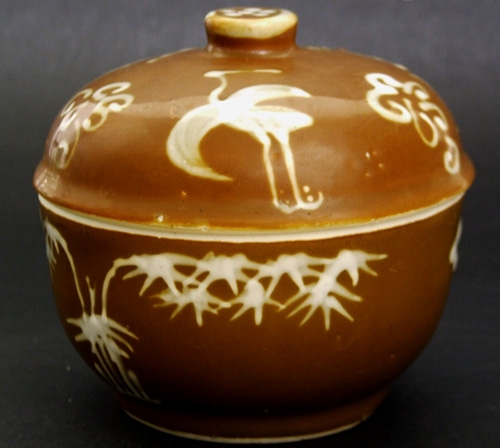
Ming Wanli box thickly potted in Fujian
Province - courtesy R&G McPherson
Antiques
Dehua (Te-hua) in Fujian produced white ware from the 14th century, but became famous for “blanc-de-Chine” in the 16th century. Although it produced bowls and incense burners, its claim to fame was for figures of Buddhist Deities.
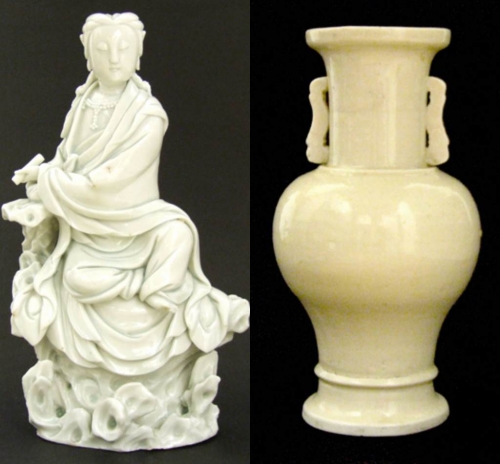
Ming Chongzhen figure of Guanyin and
blanc-de-chine temple vase from Dehua -
courtesy R&G McPherson Antiques
The porcelain and glaze were a perfect match and of higher quality than the best at Jingdezhen. Swatow in North Guangdong produced a colourful ware named after the port. The best-known ware was boldly decorated polychrome with overglaze red, green and turquoise, with blue and black for finer detailing.
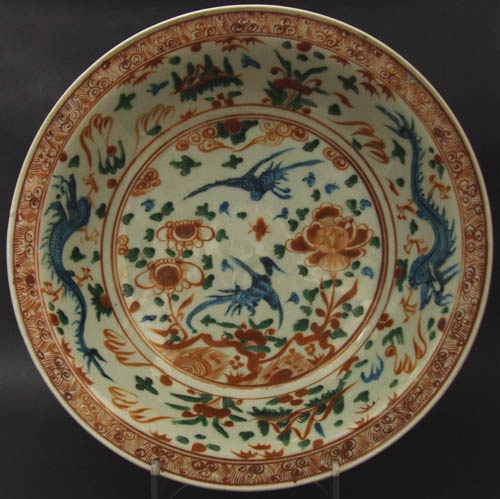
Late Ming polychrome enamel Swatow dish,
decorated with birds, dragons and flowers
- courtesy R&G McPherson Antiques
Large stoneware green or brown glazed jars, up to 4 ft high, were also produced in the South Coastal area. They were incised or relief moulded with dragons, hence they were called “dragon jars”. Large numbers were exported to Malaysia and Indonesia. Also a new ceramic tradition started in the town of I-hsing on the west side of lake T’ai, catering to the tea taste of scholars in the nearby Su-chou area. Teapots were individually made rather than mass produced and they were often signed or even poetically inscribed by highly reputable master craftsmen. The wares were usually unglazed and derived their striking colours – brown, beige, reddish purple, yellow black and blue after firing from the distinctive clays in the region. They were known as “purple sand” teapots.
It is the case that underglaze cobalt blue and white wares made up the lion’s share of Ming porcelain.
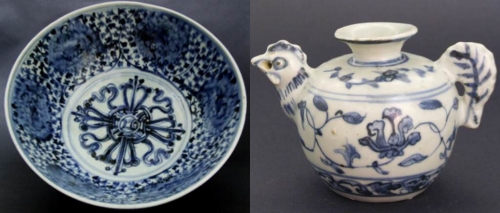
Ming Hongzhi blue and white porcelain bowl
with central religious symbol and water
dropper representing a chicken - courtesy
R&G McPherson Antiques
However, there were clearly many other techniques and wares available such as the monochrome wares, various overglaze decorated wares, pure-white figural porcelain and very colourful Ducai ware.
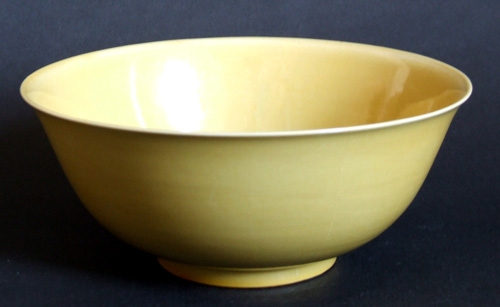
Ming Jiajing imperial yellow porcelain
bowl - courtesy R&G McPherson Antiques
However, anything other than porcelain with underglaze blue decoration raised little interest in Europe. So things that Chinese scholars and connoisseurs most valued, the “beautiful superfluous things” that were inherent in the long tradition of their culture, seldom found their way over the borders of the Empire and were not considered to have any commercial value outside China. For Europeans not acquainted with the alternatives, everyday objects such as household blue and white porcelain were considered to be luxury goods, which is why so many people in the west erroneously think of Ming porcelain as always blue and white.
| Page: 129 of 418 Go To Page: | |
◁◁ First | ◁ Previous | Next ▷ | Last ▷▷ |
Author: Dr. Stan Jones © Copyright 2010 -