

9. Ceramic Development in the Middle East
| 934 Page: 187 of 418 Go To Page: |  |
◁◁ First | ◁ Previous | Next ▷ | Last ▷▷ |
Toys were made cheaply from clay by local potters, also games boards and pieces, loom weights and even rat traps.

Dynasty 12, toy rattle and top UC30028 and
43162 - Copyright of the Petrie Museum of
Egyptian Archaeology, UC
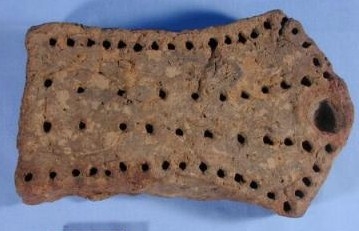
Dynasty 12, gaming board UC16722 -
Copyright of the Petrie Museum of Egyptian
Archaeology, UCL
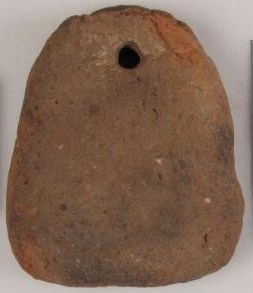
Middle Kingdom loom weight UC21286
- Copyright of the Petrie Museum
of Egyptian Archaeology, UCL
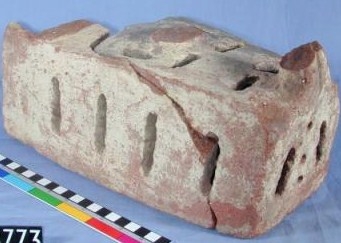
Dynasty 12, Rat trap UC16773 - Copyright
of the Petrie Museum of Egyptian
Archaeology, UCL
At the 2nd cataract in Lower Nubia pottery sinkers were used by the local fishermen to sink their nets. Open bowls were made as grave goods, decorated inside with polychrome after firing, now including Azurite blue. The decoration included humans, birds, plants, stars and geometric patterns. Ceramic offering dishes decorated with animals and food were partitioned for different food and drink offerings. Painted and glazed red ware “Hes” vases were used to contain purified water in rituals. Clay coffins were used having lids with anthropoidal (human) features. Large pottery vessels were used to bury infants. The tops were broken off to allow access for the small body.
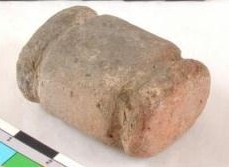
Dynasty 12 net sinker UC43099 - Copyright
of the Petrie Museum of Egyptian
Archaeology, UCL
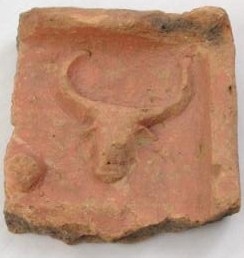
Middle Kingdom offering tray
UC38993 - Copyright of the
Petrie Museum of
Egyptian Archaeology, UC
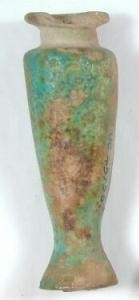
Middle Kingdom blue/green
glazed “Hes” jar UC45756
- Copyright of the Petrie
Museum of Egyptian
Archaeology, UCL
The last ruler of the Twelfth Dynasty was a woman, Sobekneferu (1,799-1,795). After her death, Egypt declined under a number of weak leaders of the Thirteenth Dynasty and native Egyptians started to retreat southwards. In the Capital of Kushite Sudan, Kerma, around 1,750 BC, they were using alkali glazes on many stone and quartzite objects. The glazes were typically blue using copper, and were used on stones up to 1m diameter. Apparently they never thought of using it on earthenware.
| Page: 187 of 418 Go To Page: | |
◁◁ First | ◁ Previous | Next ▷ | Last ▷▷ |
Author: Dr. Stan Jones © Copyright 2010 -