

6. Spread of Agriculture, Pottery and Civilisations
| 838 Page: 44 of 418 Go To Page: |  |
◁◁ First | ◁ Previous | Next ▷ | Last ▷▷ |
There were pottery pipes for drains usually within walls. Sewage water had to go into a cesspit before going into street drains. These were brick structures in richer areas or a large earthenware pot in poorer ones. Waste water was directed to drains from each, often two storey, house. Large fired bricks were used to cover these drains.
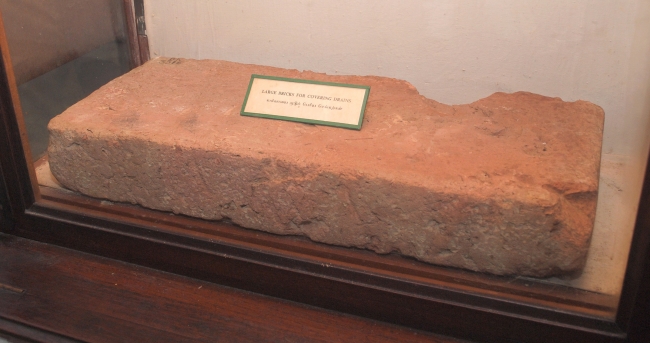
Large Fired Brick - courtesy Government Museum, Chennai
They ran into main sewers walled with fired bricks and corbelled roofs (arches had not yet emerged) high enough to stand up in, which ran alongside major streets. This sewage and drainage system was far more advanced than any found in contemporary urban sites in the Middle East. Staircases were made of solid brickwork and bathrooms were paved with 25mm thick bricks or tiles. Some bricks were wedge or L-shaped shaped and others shaped as door sockets.
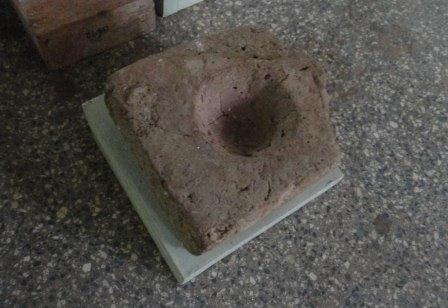
Socketed Fired Brick for Door Hinge
- courtesy Government Museum, Chennai
| Page: 44 of 418 Go To Page: | |
◁◁ First | ◁ Previous | Next ▷ | Last ▷▷ |
Author: Dr. Stan Jones © Copyright 2010 -