

6. Spread of Agriculture, Pottery and Civilisations
| 840 Page: 46 of 418 Go To Page: |  |
◁◁ First | ◁ Previous | Next ▷ | Last ▷▷ |
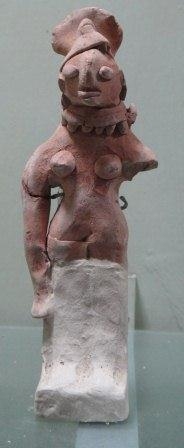
Female Figure
- courtesy Government
Museum, Chennai
An interesting feature is that most vessels were without handles. Painted decoration included lines, loops, intersecting circles, triangles, peacocks, fishes and leaves that was carried out in painstaking detail, as was the incised and zigzag appliqué work. Most city dwellers seemed to be artisans or traders, and there were special districts in the city where craftsmen worked, for example where potters made wheel thrown pots and terracotta figures. Amazingly detailed terracotta figurines of girls in dancing poses reveal they enjoyed dancing, but also that their modelling expertise was exceptional and was only equalled 3,000 years later in Greece.
Other figures included the “mother goddess” (some pregnant and others with babies), rhinoceros, bulls, rams, birds, buffalo and animal heads with horns.
Large terracotta storage urns were found, typically 1 m high and 0.6 m diameter, sometimes set in the floor (they tapered almost to a point at the base).
There were also sets of standard weights, and jewelry such as stylised pendants depicting horned animal heads. The numerous terracotta models of wagons might have been toys or ritual objects. They indicated the progress of wheeled vehicles as the earlier solid wheels later showed pre-Aryan spoked wheels, painted or in relief.
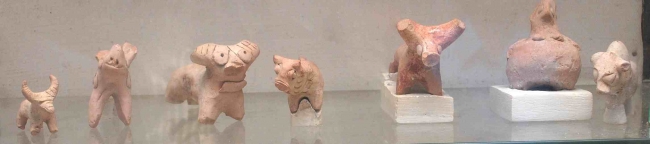
Animal Models - courtesy Government
Museum, Chennai
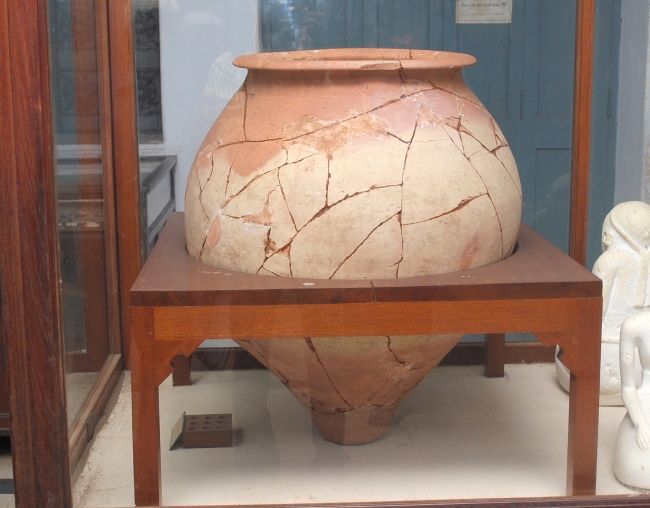
Large Storage Vessel - courtesy Government
Museum, Chennai
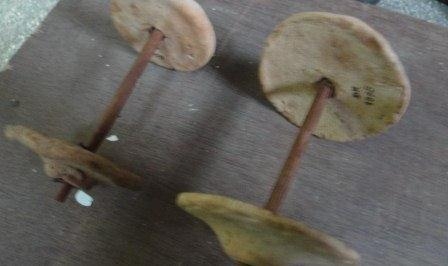
Toy Wheels - courtesy government
Museum, Chennai
| Page: 46 of 418 Go To Page: | |
◁◁ First | ◁ Previous | Next ▷ | Last ▷▷ |
Author: Dr. Stan Jones © Copyright 2010 -